📋 Biography
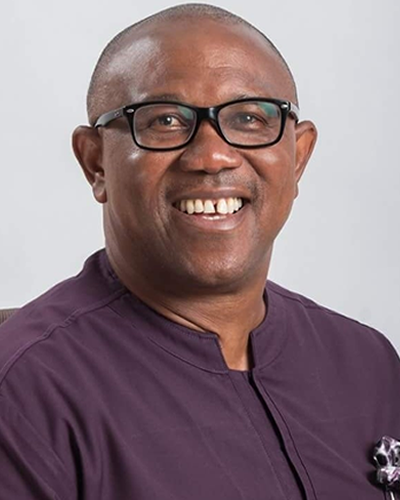
Peter Obi is a Nigerian businessman, economist, and politician widely recognized for his reform-driven leadership style, fiscal discipline, and advocacy for productive governance. He was born on July 19, 1961, in Onitsha, Anambra State, Nigeria. Obi studied Philosophy at the University of Nigeria, Nsukka, before pursuing executive and business education programs at institutions including Harvard Business School, the London School of Economics, and Oxford University.
Before entering politics, Peter Obi built a successful career in business and banking, serving on the boards of several major Nigerian companies and financial institutions. He became nationally prominent after serving as Governor of Anambra State from 2006 to 2014 under the All Progressives Grand Alliance (APGA). During his administration, he gained a reputation for prudent financial management, improved educational support, infrastructural development, and responsible governance. He reportedly left significant savings and investments for the state after leaving office.
Obi later became the vice-presidential candidate of the Peoples Democratic Party (PDP) in the 2019 general election alongside Atiku Abubakar. In 2022, he joined the Labour Party and contested the 2023 presidential election, where he inspired a massive youth-driven political movement popularly known as the “Obidient Movement.” His campaign attracted millions of young Nigerians and urban voters seeking accountability, transparency, and a departure from traditional political structures.
Known for his simple lifestyle, data-driven speeches, and emphasis on economic productivity, Peter Obi remains one of the most influential opposition figures in Nigeria ahead of the 2027 elections.
📜 Manifesto & Key Promises
Peter Obi promotes a governance agenda centered on economic transformation, security, accountability, and human capital development. His manifesto strongly emphasizes shifting Nigeria from a consumption-based economy to a production-driven economy capable of creating jobs, reducing poverty, and increasing exports.
On the economy, Obi advocates major investments in agriculture, manufacturing, technology, and small businesses to stimulate industrial growth and employment opportunities. He supports reducing the cost of governance, curbing wasteful spending, and channeling public resources into productive sectors that directly improve citizens’ lives. He also promotes fiscal discipline, debt reduction, and transparent management of public funds.
In education, Obi prioritizes increased funding for schools, teacher development, digital learning, and research institutions. He believes education is critical for national competitiveness and long-term economic development. In healthcare, he supports strengthening primary healthcare systems, improving medical infrastructure, and reducing medical tourism through better local healthcare delivery.
On security, Obi advocates intelligence-driven policing, modern security technology, community engagement, and economic empowerment programs aimed at reducing crime and insecurity. He also supports restructuring discussions to improve governance efficiency and regional development.
A major feature of Obi’s political philosophy is accountability and measurable governance. He frequently emphasizes prudent management of resources, evidence-based policymaking, and leadership by example. His broader vision is to build a secure, productive, and united Nigeria where governance focuses on citizens’ welfare, economic opportunity, and institutional integrity.